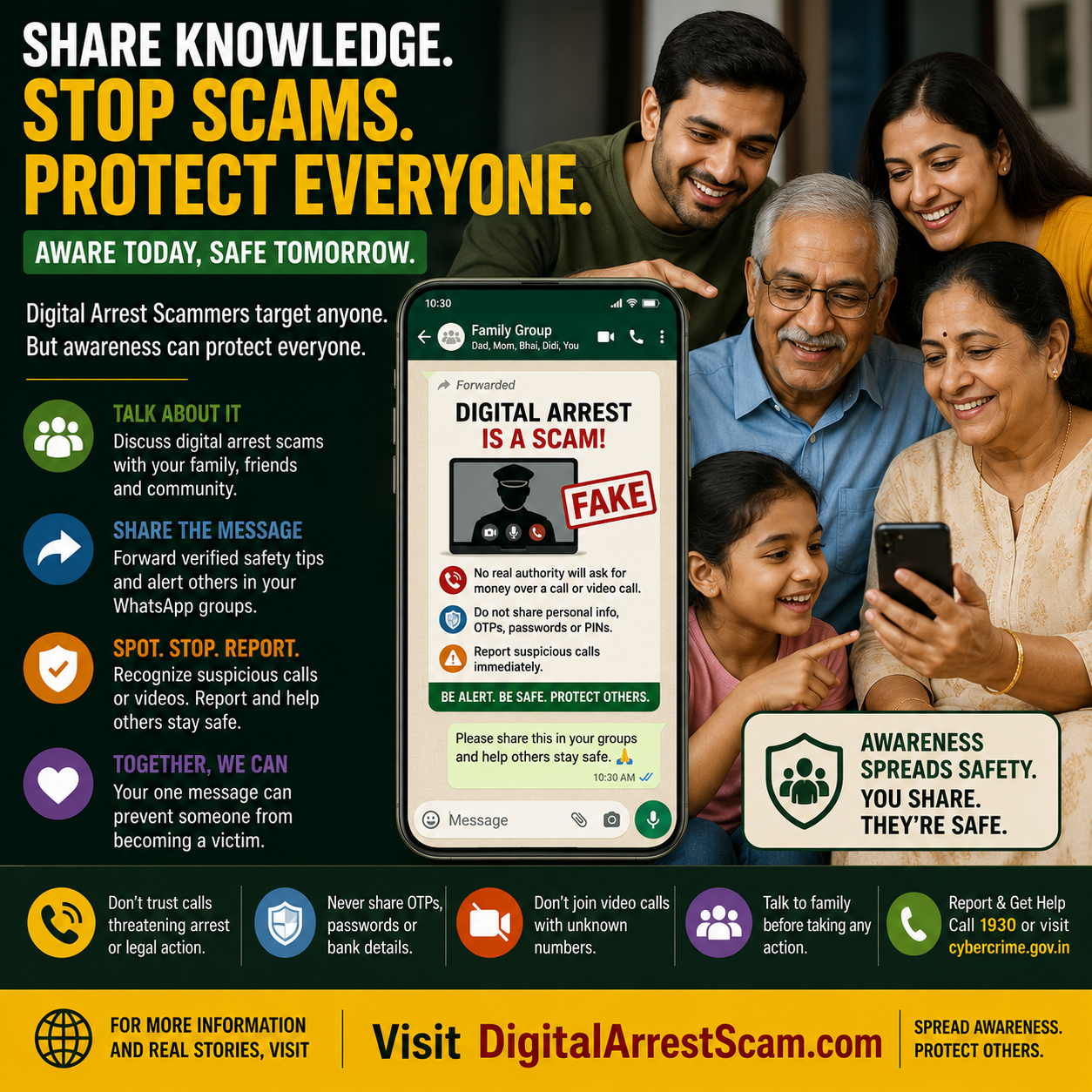
Are You Being Threatened With “Digital Arrest”?
You are probably being targeted by a scam. Do not panic. Do not transfer money. Do not share OTPs, bank details, Aadhaar, PAN, passport, screen, or location. Disconnect and verify through official channels.
Important : We are an independent public-awareness website. We are not a police department, court, bank, courier company, cybercrime agency, government authority, or recovery agency.
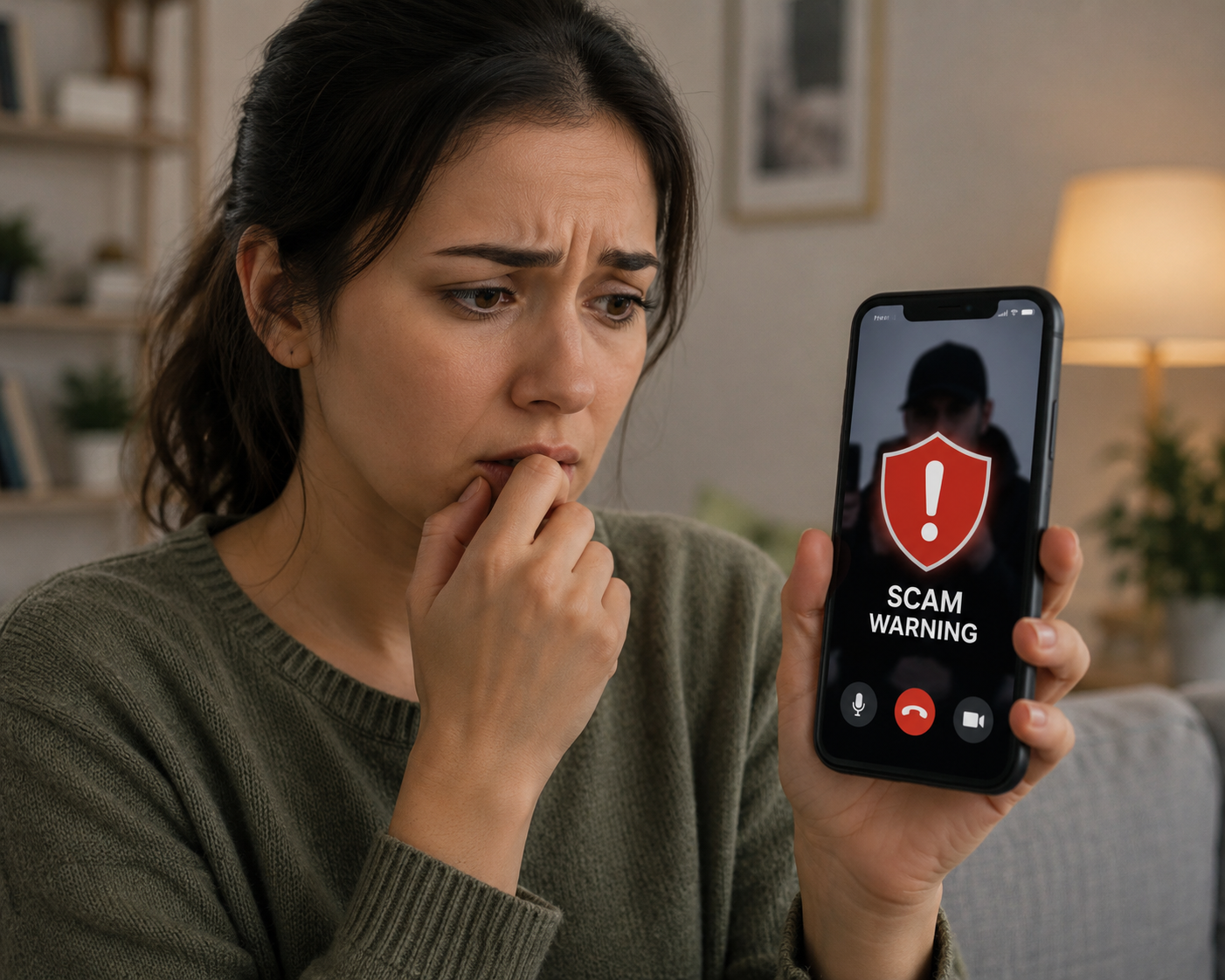
Immediate Safety Checklist
✓ Hang up or disconnect the video call.
✓ Do not transfer money to any “safe account.”
✓ Do not share OTPs, passwords, documents, or screen.
✓ Call a trusted family member or friend.
✓ Report through official country channels.
Do This in the Next 60 Seconds
If you are scared, pressured, or still on a call, follow these steps first. Do not argue with the caller. Do not try to prove your innocence on call. Disconnect and verify independently.
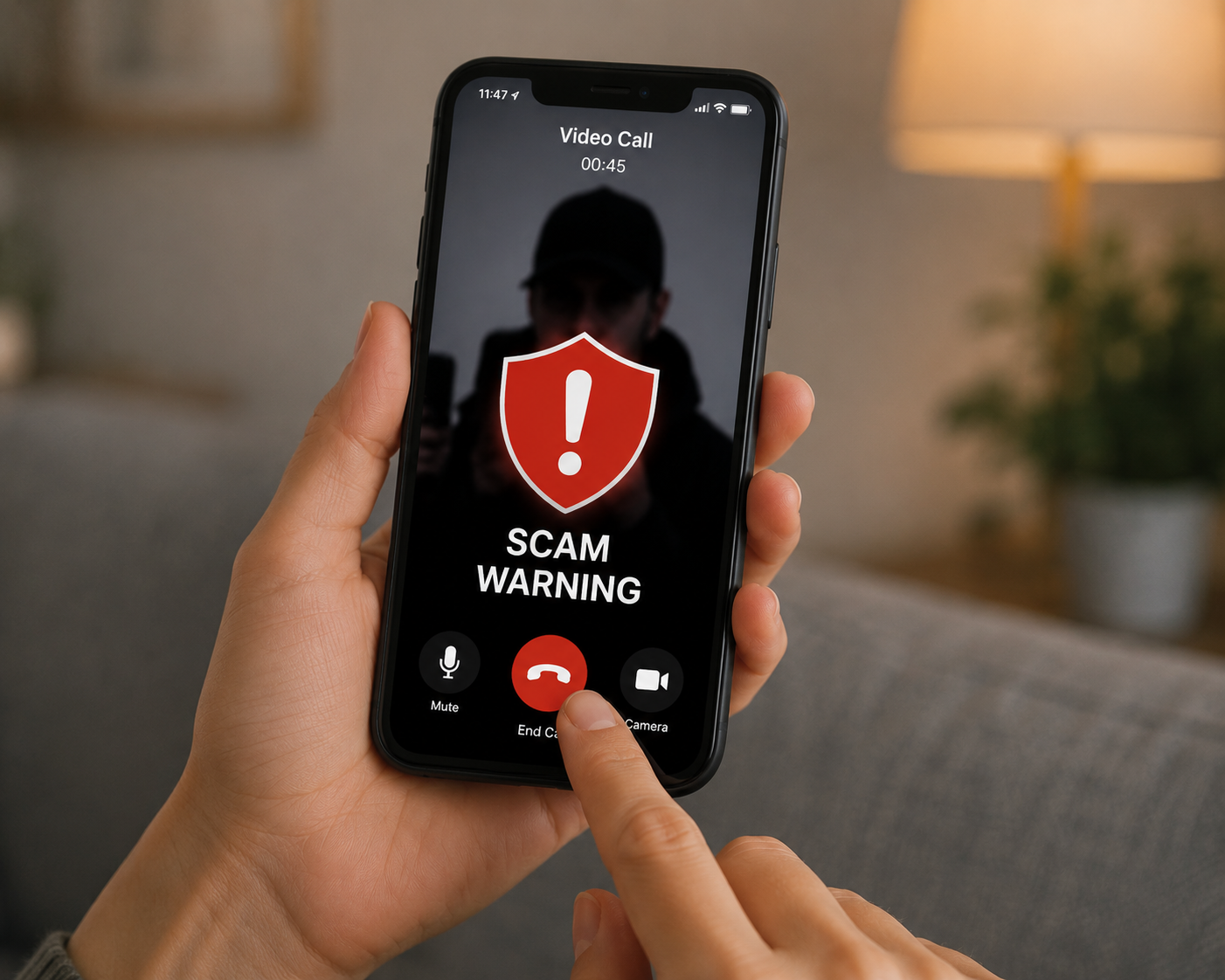
Disconnect
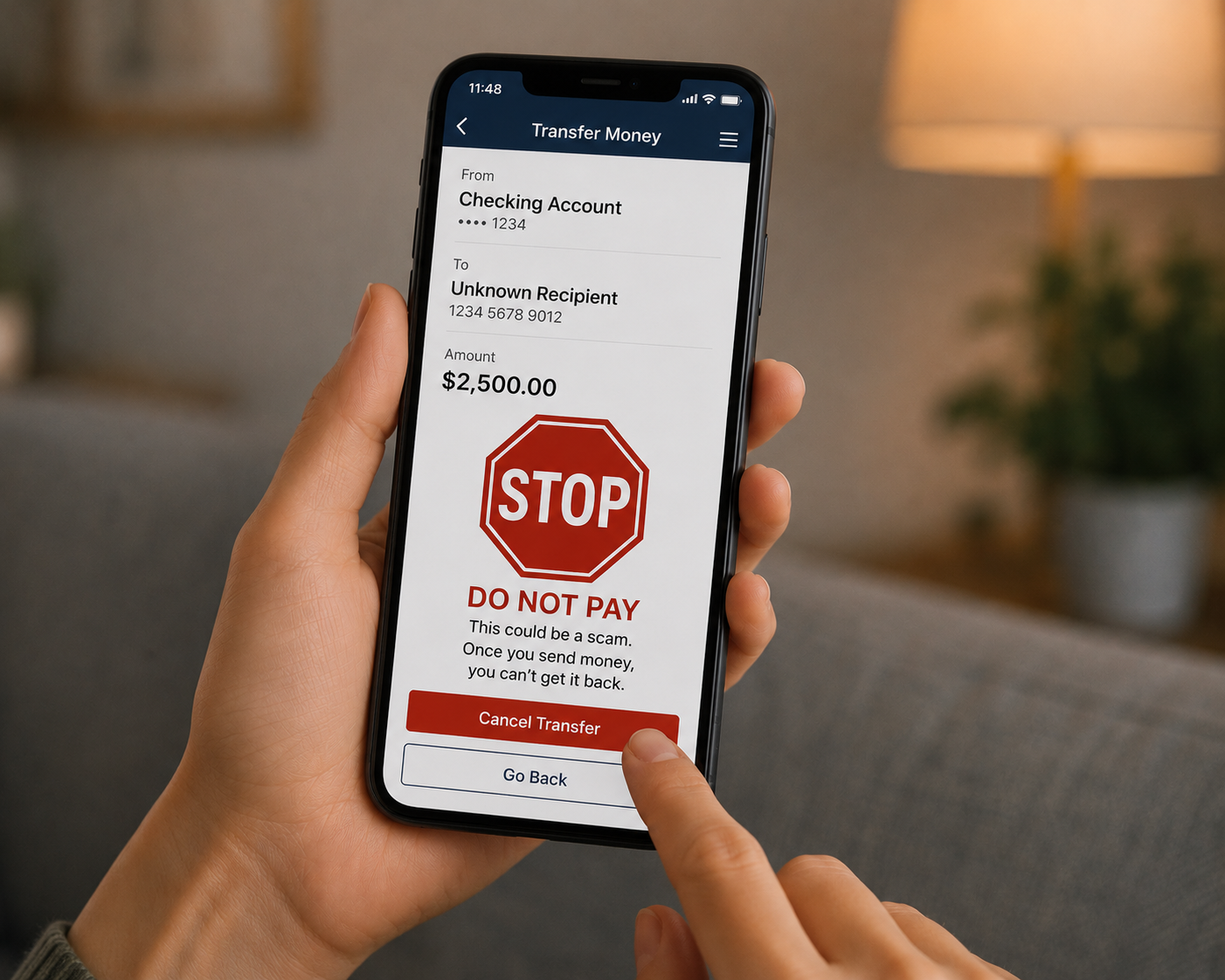
Do Not Pay
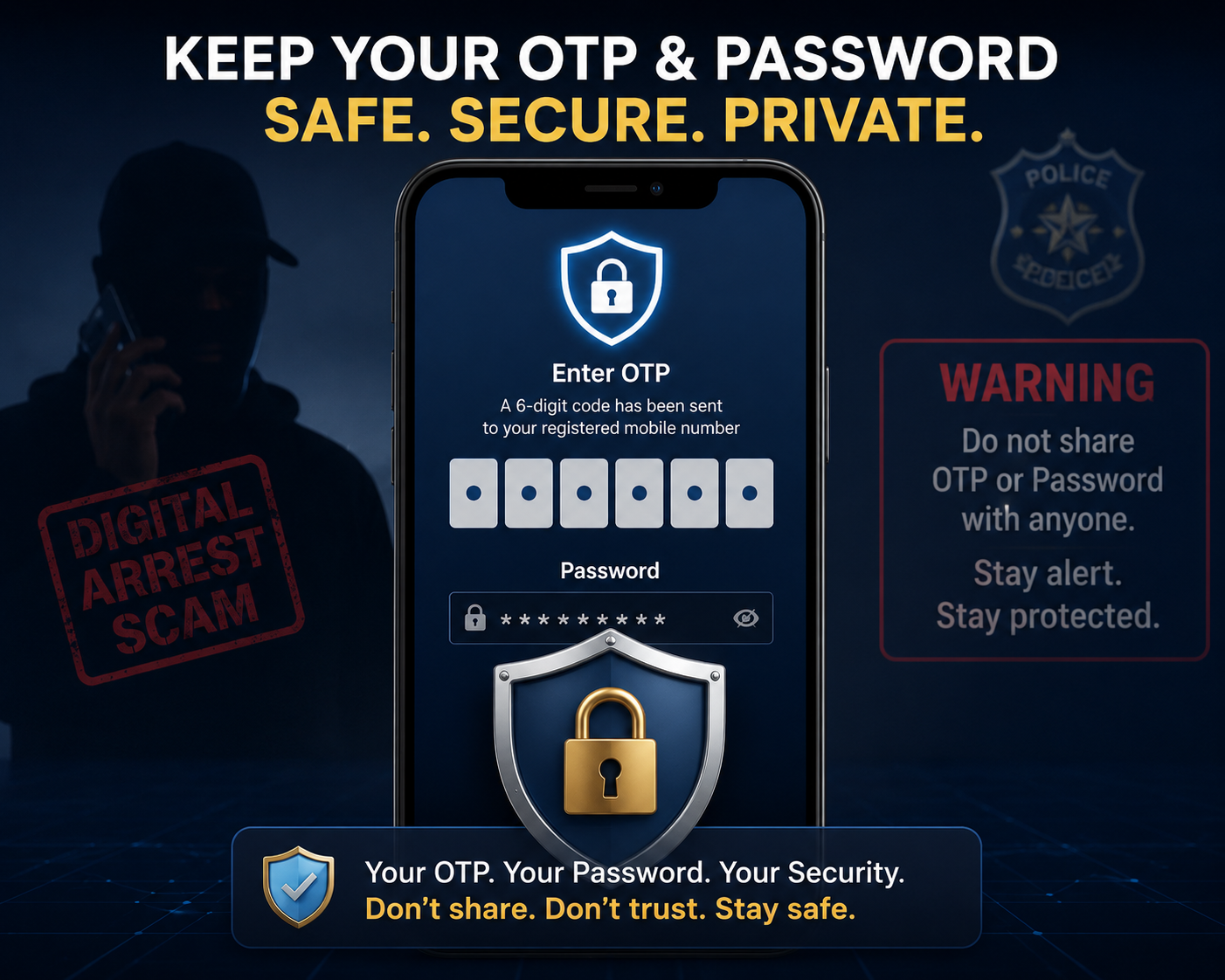
Do Not Share
Do not share OTP, passwords, bank details, documents, screen, or remote access.
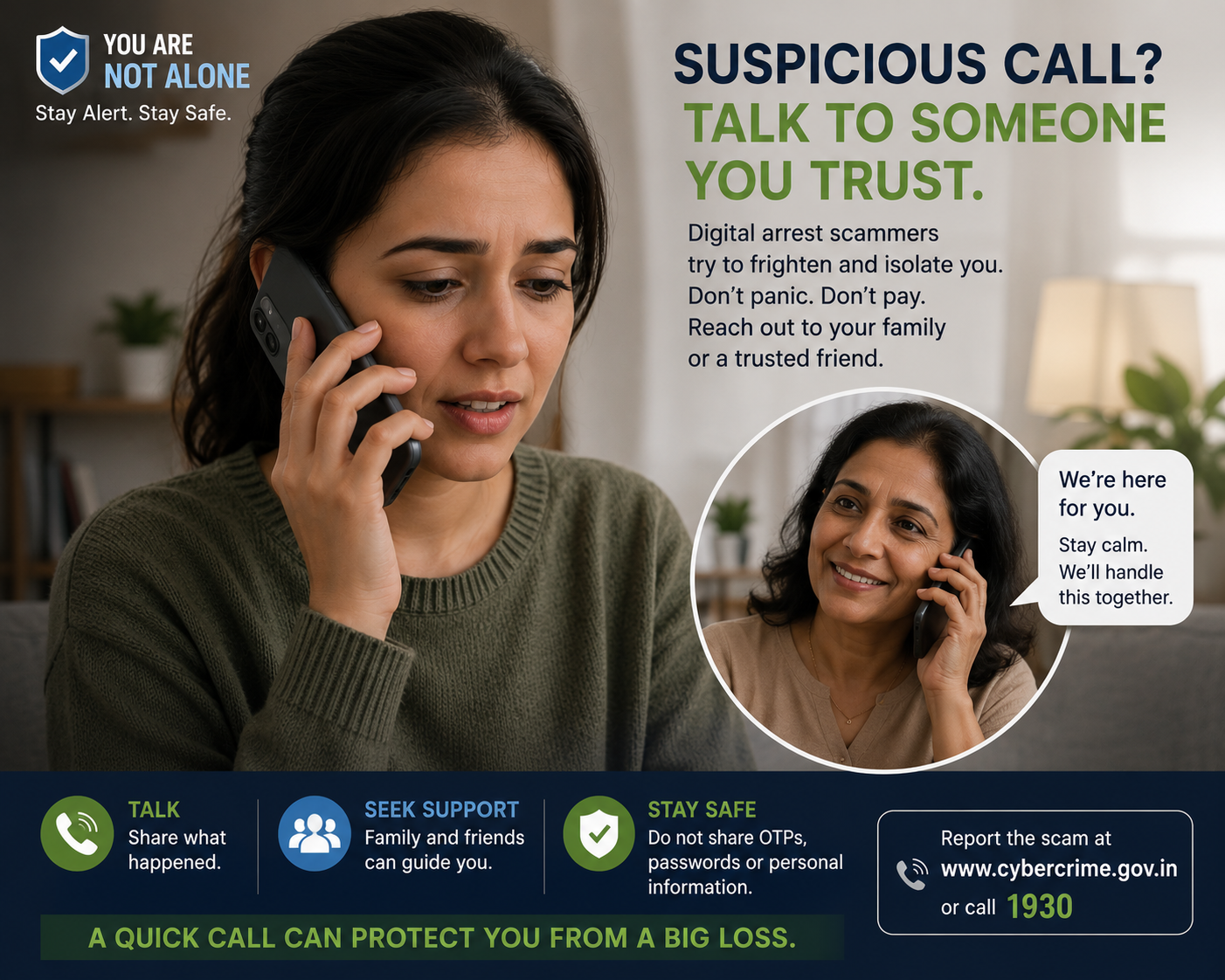
Call Someone You Trust
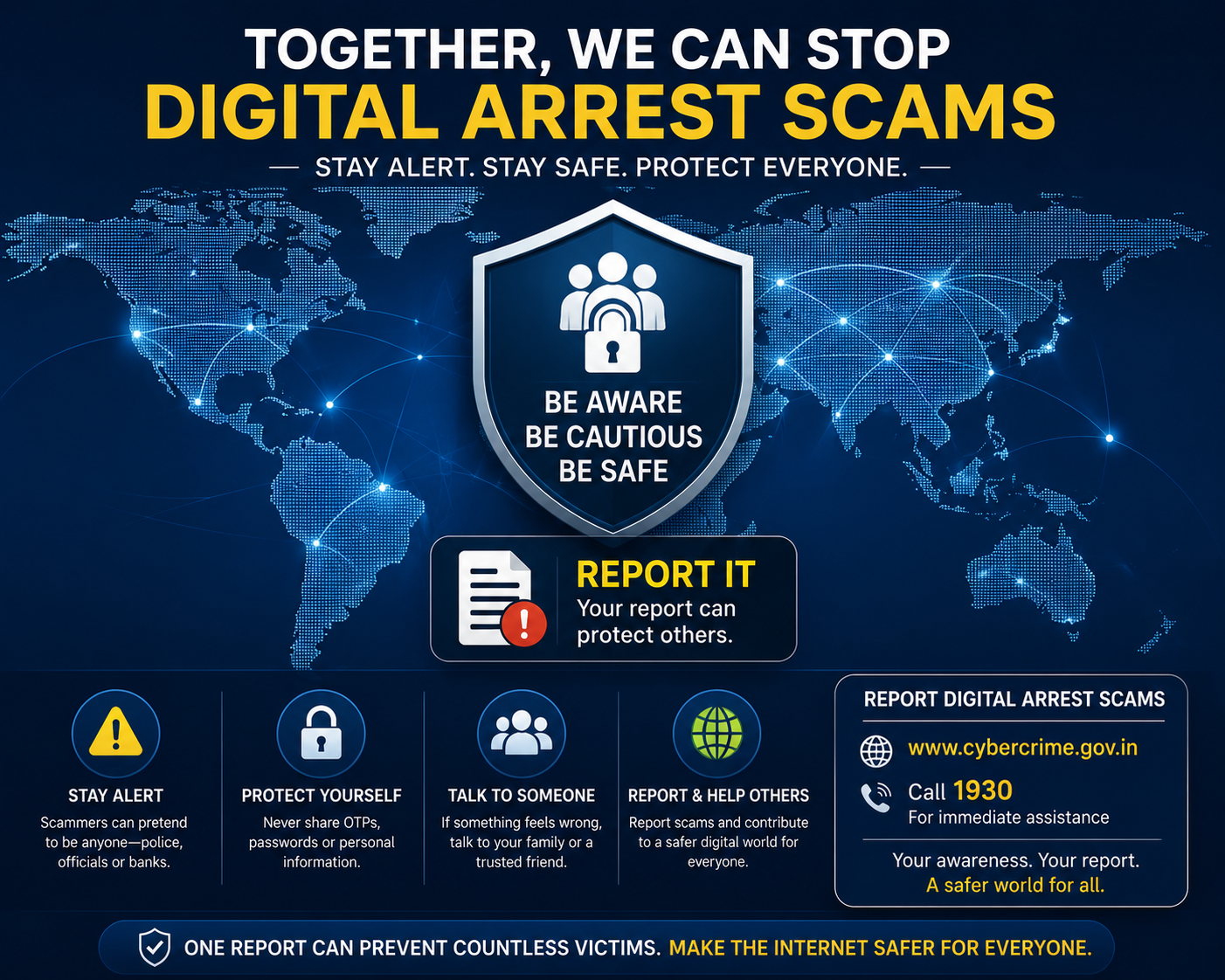
Report Quickly
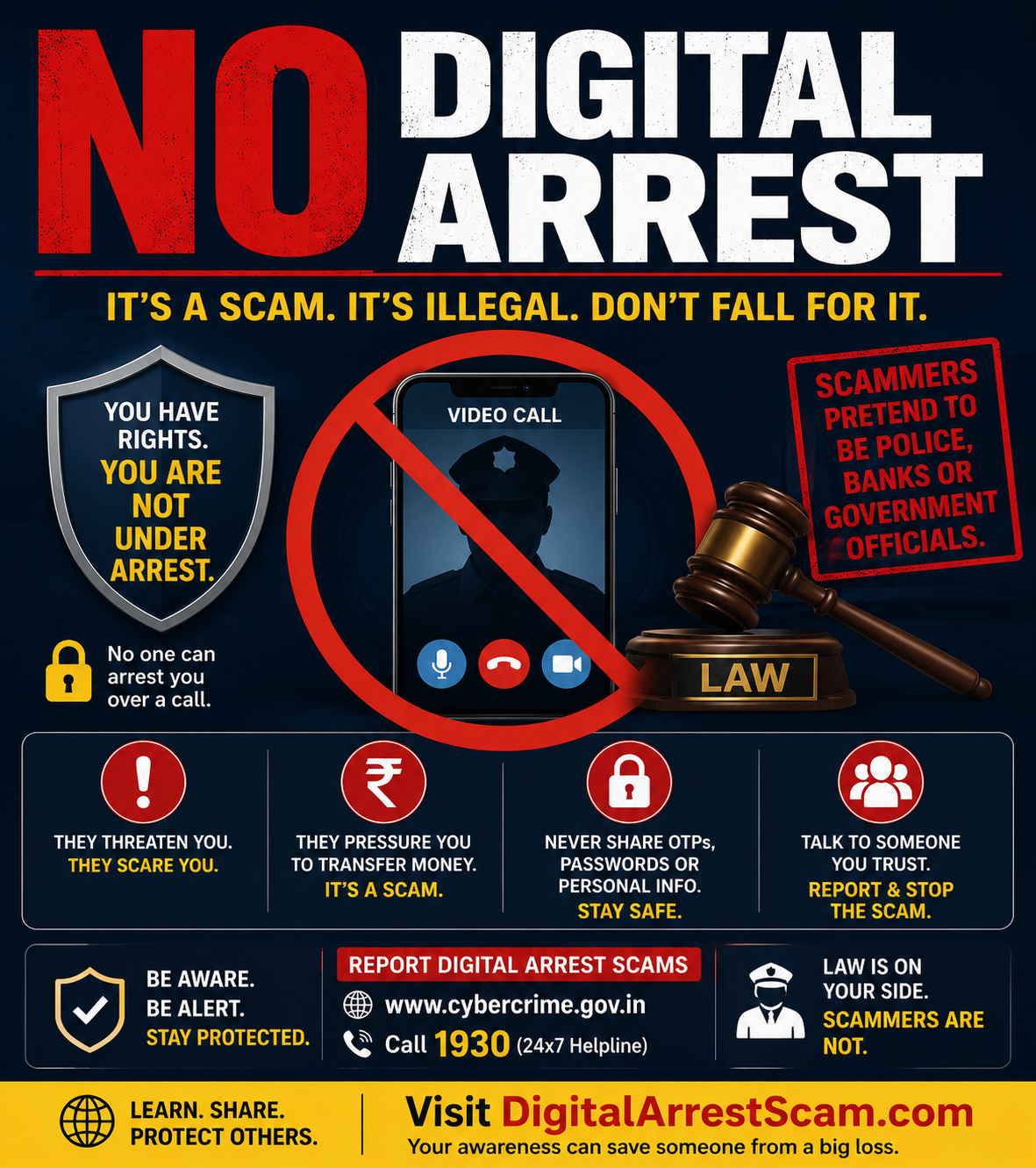
There Is No Such Thing as a Legal “Digital Arrest”
Scammers use the phrase “digital arrest” to isolate victims and create fear. A real law-enforcement process does not require you to sit on WhatsApp, Skype, Zoom, or a phone call for hours while transferring money to prove innocence.
If someone is asking you to stay on a video call, avoid telling your family, install an app, or transfer money, treat it as a scam.
What Did the Caller Say?
Digital arrest-style scams often begin with one of these frightening claims. If any of these sound familiar, disconnect first and verify independently.
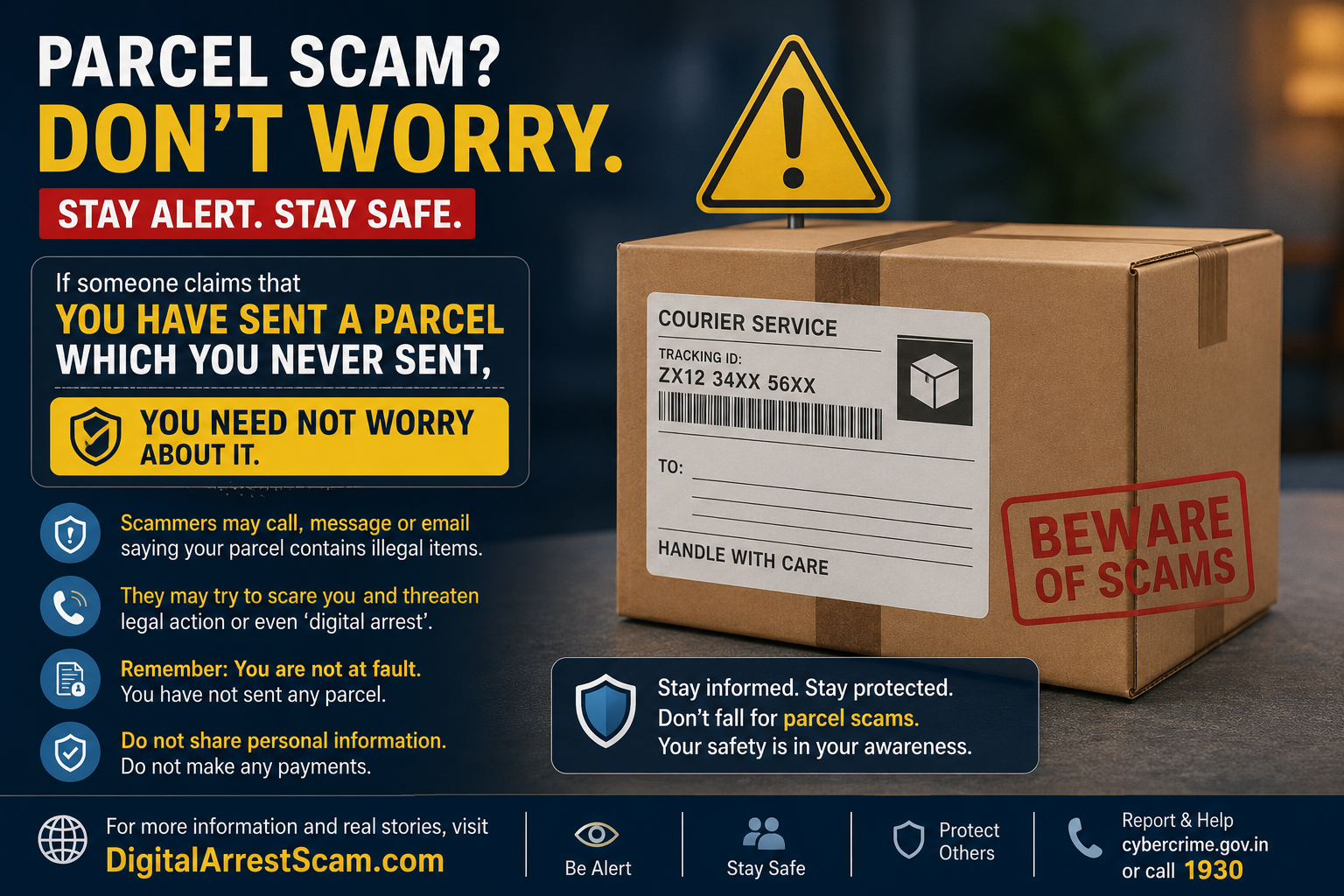
“Your parcel contains drugs”
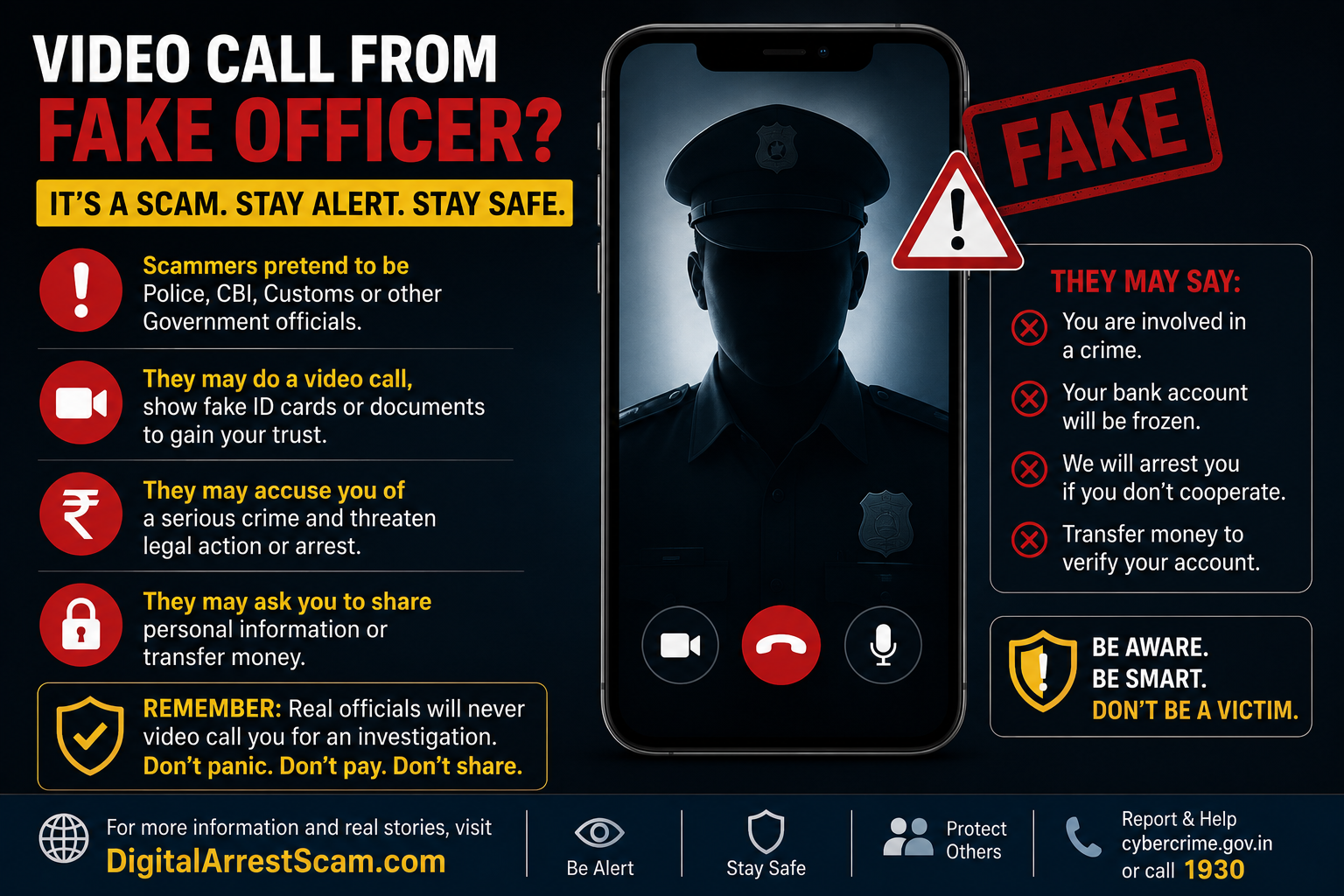
“Police / CBI / Cyber Cell is on the line”
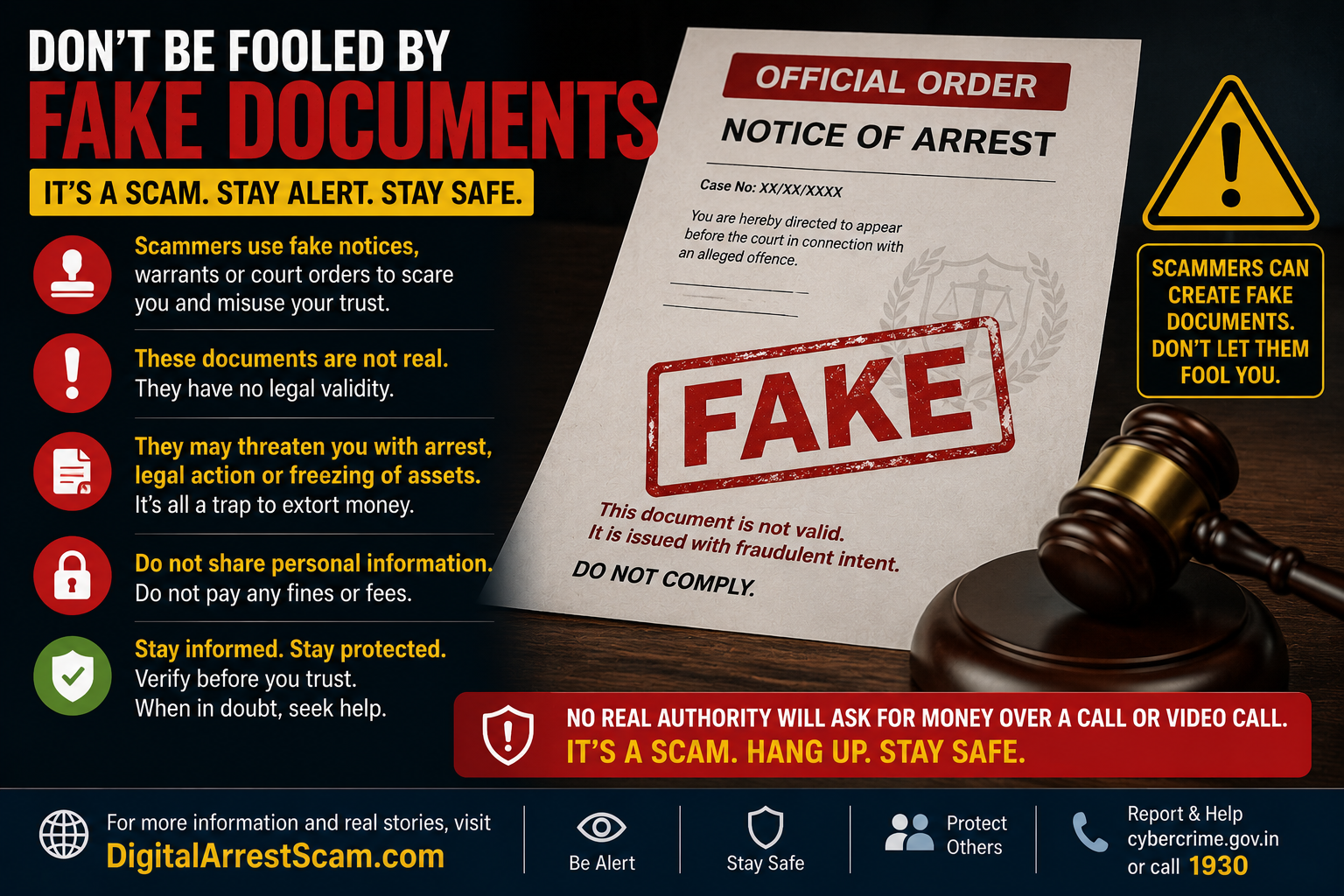
“A warrant has been issued”
10 Signs This Is a Digital Arrest Scam
- They say you are under digital arrest.
- They ask you to stay on video call.
- They threaten arrest, jail, or asset seizure.
- They show a fake warrant, FIR, ID card, or court order.
- They ask you not to tell family or friends.
- They ask for OTPs, passwords, Aadhaar, PAN, passport, or bank details.
- They ask you to transfer money to a “safe” or “verification” account.
- They ask you to install AnyDesk, TeamViewer, screen-sharing apps, or APK files.
- They claim your parcel, SIM, bank account, or identity is linked to drugs or money laundering.
- They rush you and say the matter is secret or related to national security.
If even one of these is happening, disconnect and verify independently.
Report a Digital Arrest-Style Scam in Your Country
Use official reporting channels only. This website does not collect reports, payments, OTPs, bank details, or case documents.
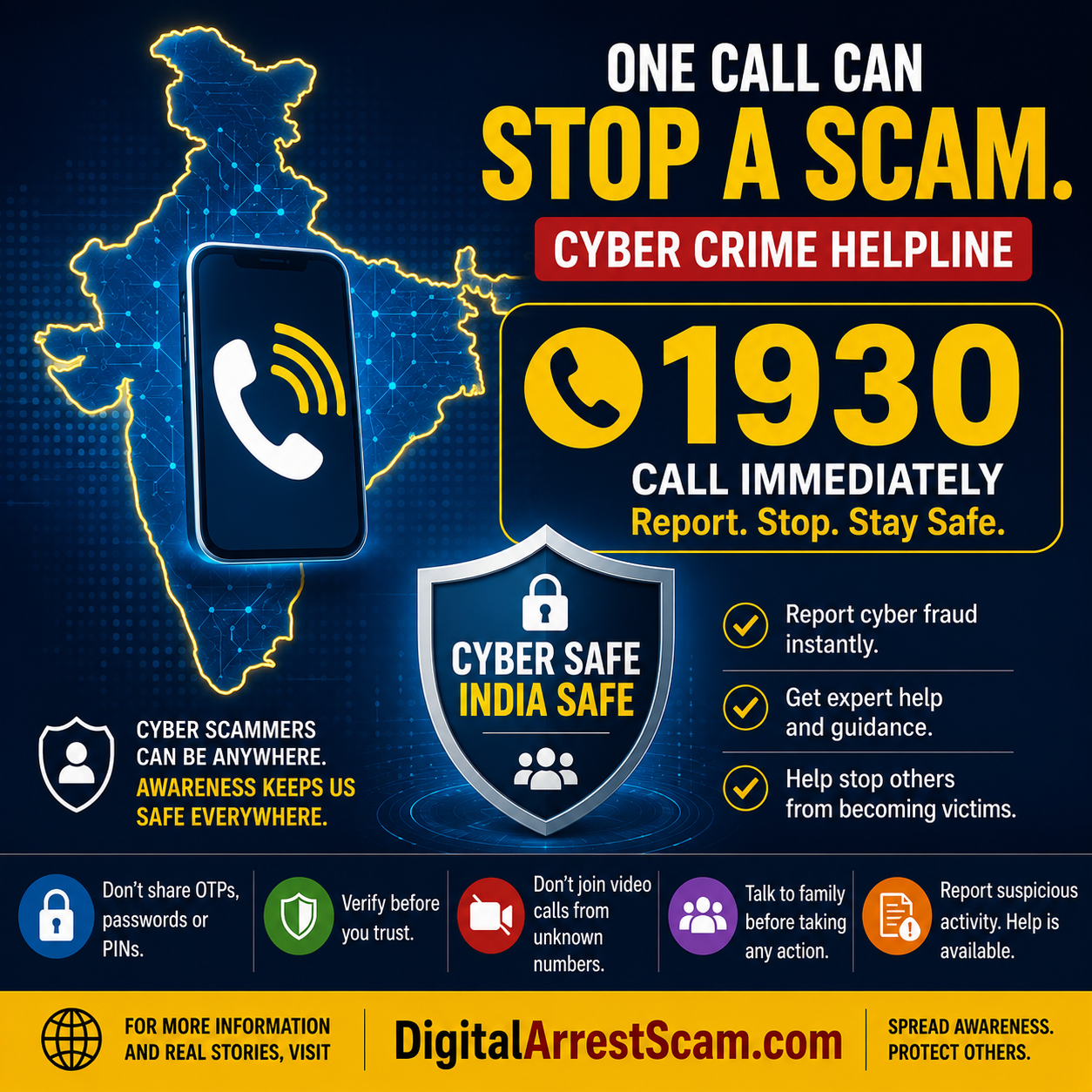
🇮🇳 India
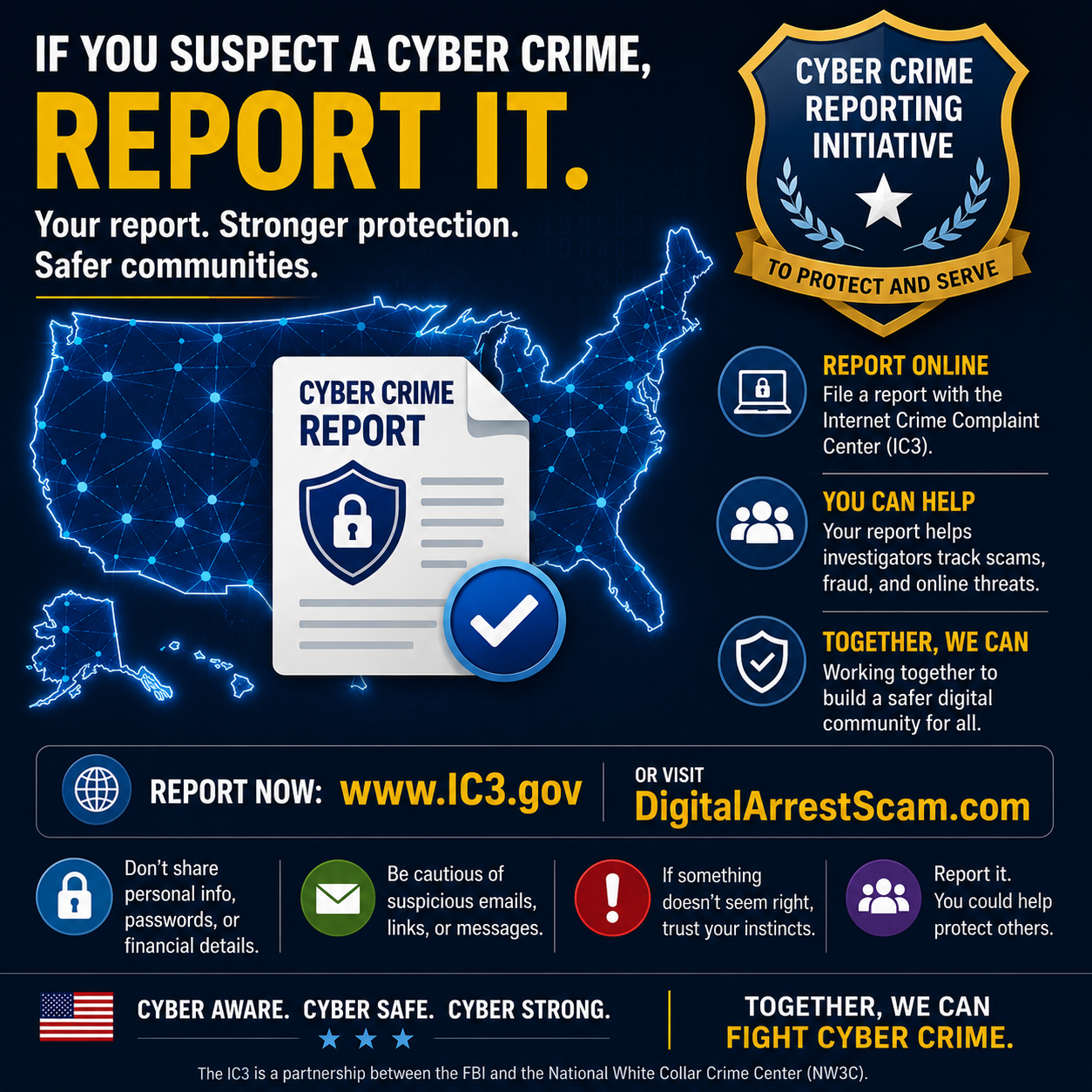
🇺🇸 United States
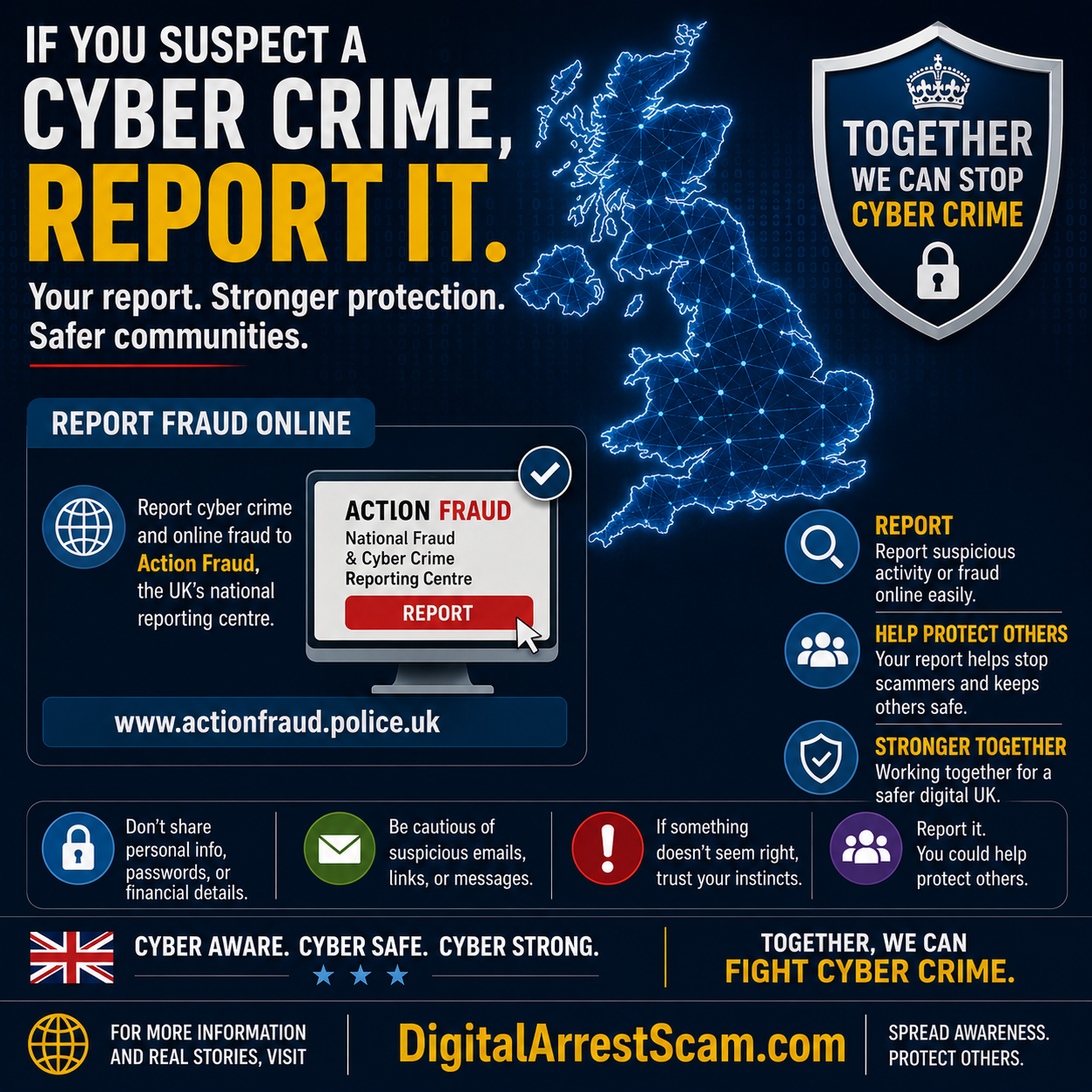
🇬🇧 United Kingdom
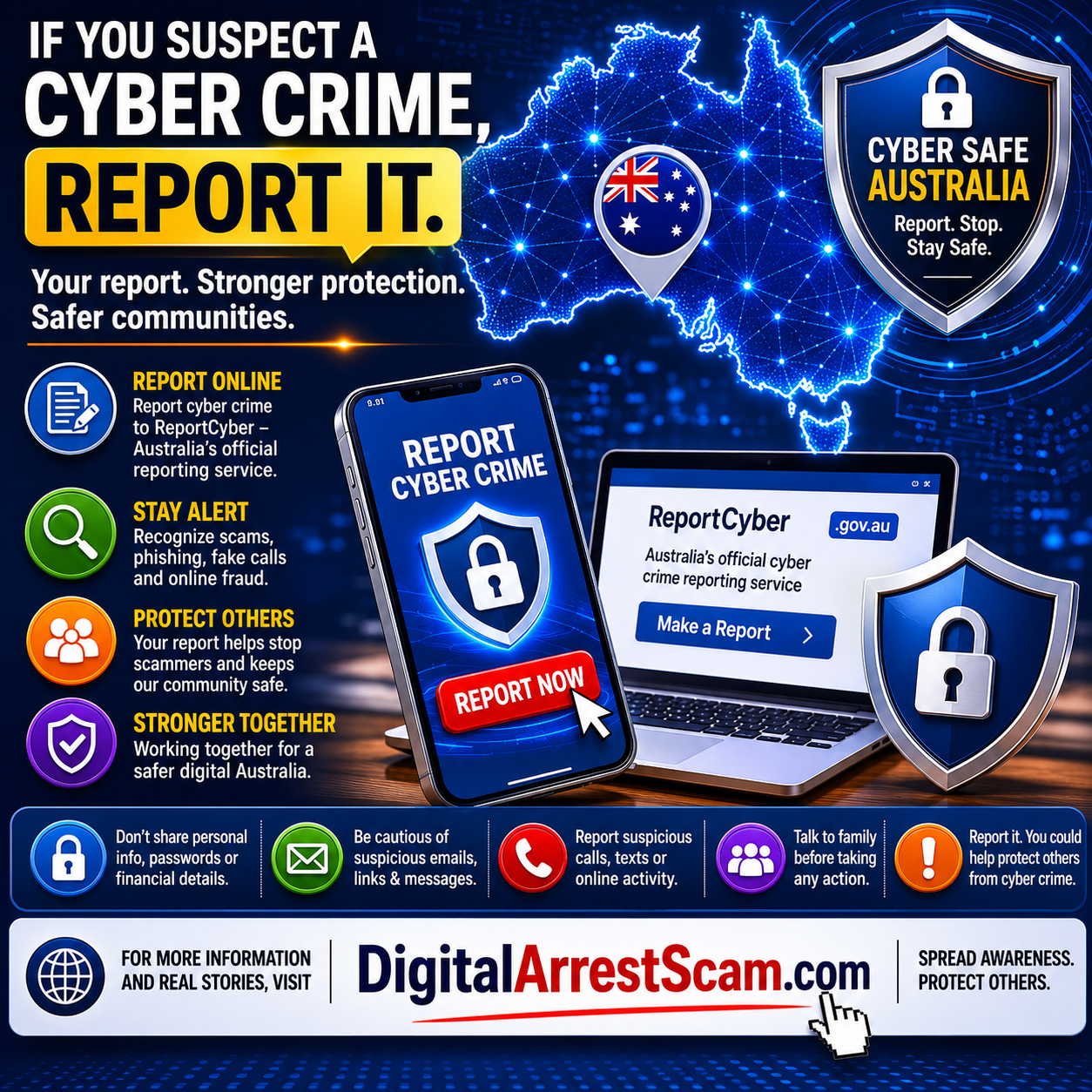
🇦🇺 Australia
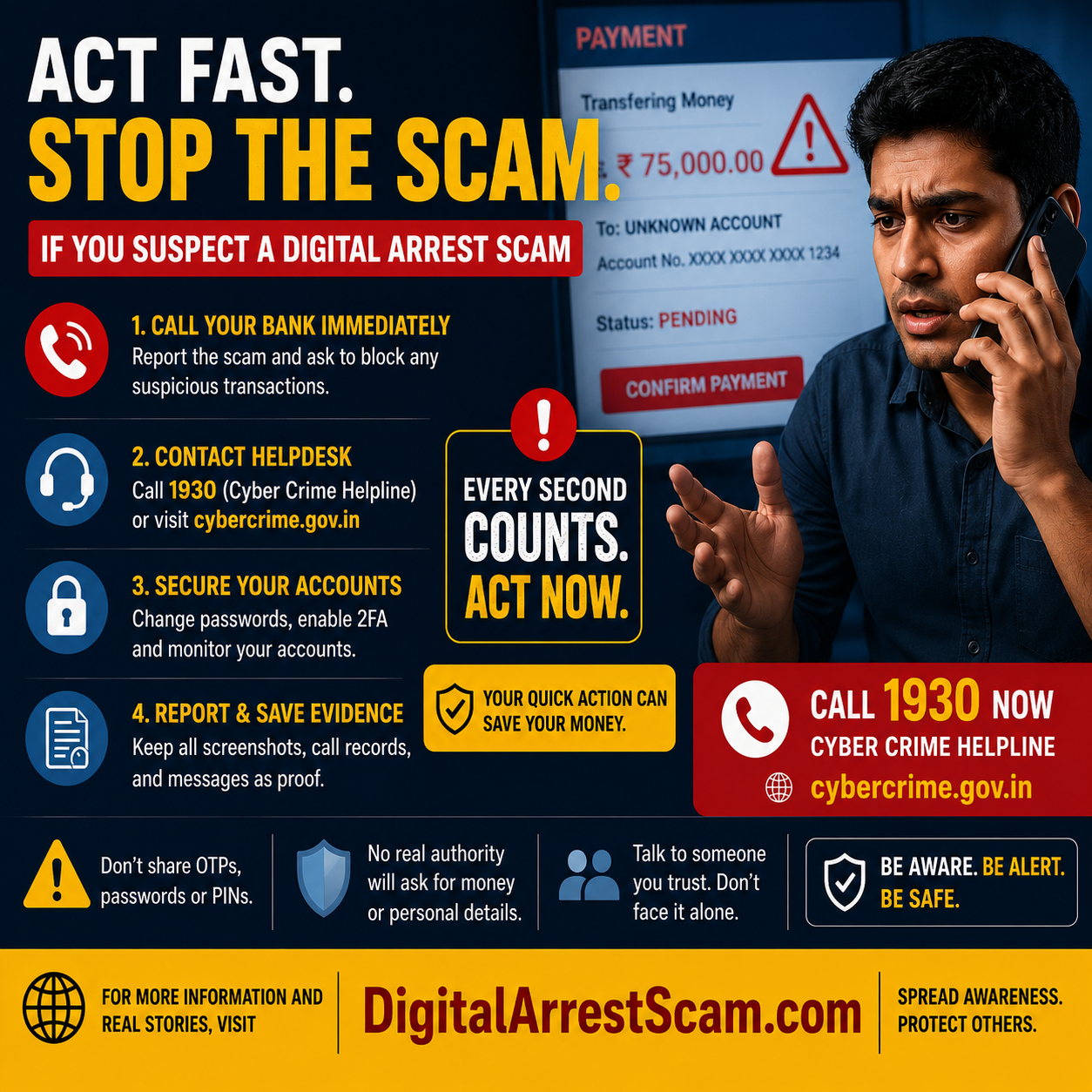
Already Transferred Money? Act Fast.
Do not feel ashamed. These scams are designed to create fear and isolation. The faster you act, the better your chance of limiting damage.
- Call your bank immediately and ask for a fraud hold, freeze, or recall request.
- Report to the official cybercrime/fraud portal in your country.
- Save screenshots, phone numbers, UPI IDs, bank account numbers, wallet addresses, video call IDs, and chat history.
- Do not delete WhatsApp, Telegram, Skype, or SMS conversations.
- Do not pay recovery agents who promise guaranteed refunds.
- Inform family immediately, even if scammers told you not to.
India-specific note: In India, call 1930 as soon as possible, especially if money was recently transferred.
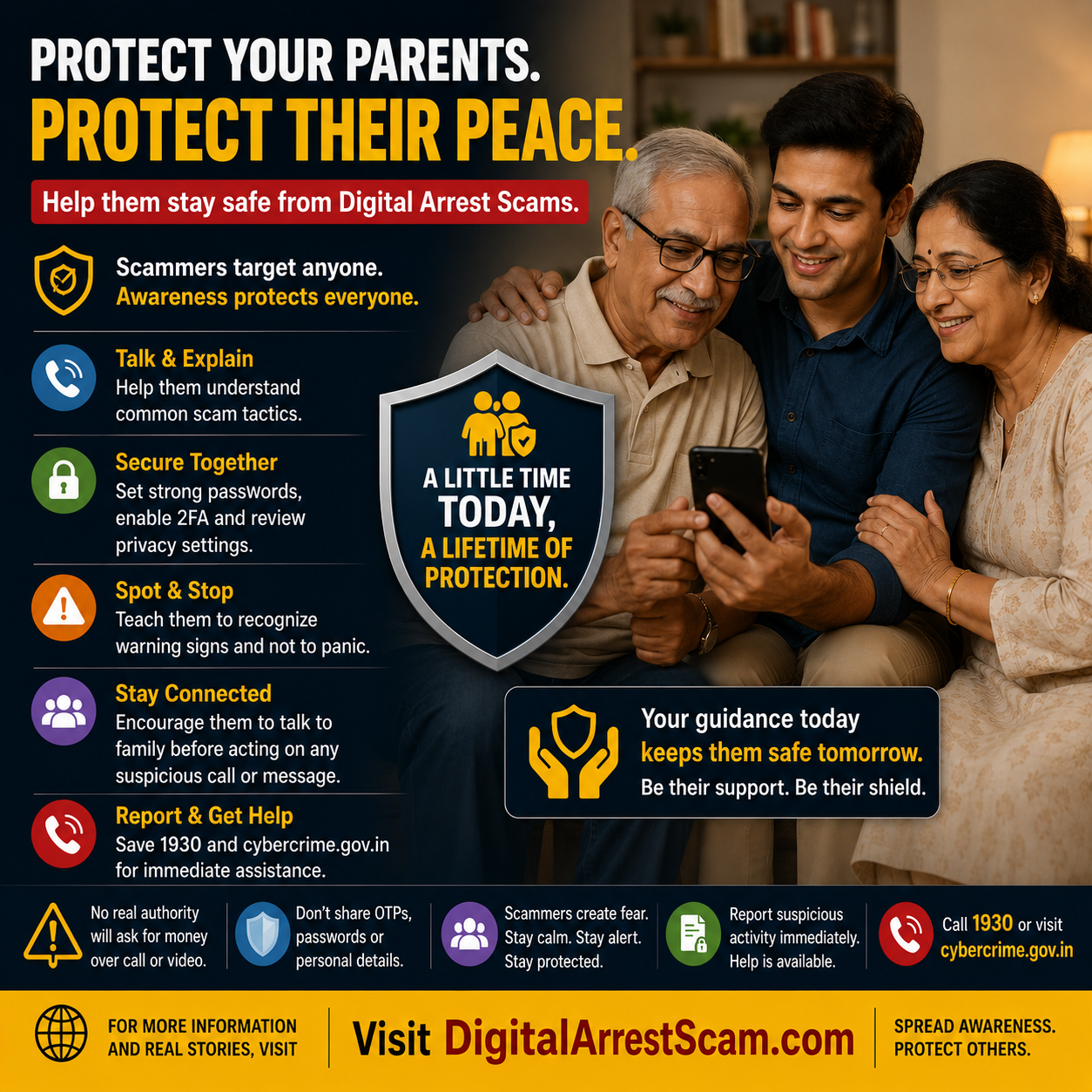
Protect Your Parents and Family
Many victims are educated, careful, and responsible. This scam works because criminals create panic, isolation, and shame. Share this warning with parents, grandparents, students, and relatives living alone.
- Teach them the phrase: “No digital arrest exists.”
- Tell them: “Never stay on a police video call.”
- Create a family rule: “No money transfer under fear.”
- Save official emergency/reporting numbers.
- Ask them to call you before responding to threats.
What Is a Digital Arrest Scam?
A digital arrest scam is a type of impersonation fraud where criminals pretend to be police, cybercrime officers, customs officials, courier companies, banks, tax authorities, or courts. They falsely claim that the victim is involved in a serious crime and pressure them to stay on call, share information, or transfer money.
Why scammers use video calls
Video calls make the threat feel official and personal. Scammers may use uniforms, fake office backgrounds, forged IDs, or fake documents to create pressure.
Why victims panic
The scammer usually claims the matter is urgent, confidential, and serious. They may mention arrest, money laundering, drugs, national security, or court orders to overwhelm the victim.
Why fake documents look convincing
Fake warrants, FIRs, ID cards, notices, and letterheads can be created easily. Do not trust documents sent through WhatsApp, Telegram, email, or screen share without independent verification.
Why educated people also fall for it
This scam does not depend on ignorance. It depends on fear, isolation, time pressure, and authority impersonation. Anyone can be targeted.
Why reporting quickly matters
Fast reporting may help banks, payment services, cybercrime authorities, and law enforcement act sooner. Always use official channels in your country.
Common Digital Arrest-Style Scam Types
What We Will Never Ask From You
digitalarrestscam.com is an awareness website. We do not collect case payments, investigation fees, OTPs, passwords, Aadhaar, PAN, passport details, bank logins, card numbers, or remote access.
- We do not provide paid recovery.
- We do not ask for money.
- We do not claim to be police.
- We do not ask for OTP.
- We do not ask for bank login.
- We direct users to official reporting channels.
Digital Arrest Scam FAQ
Is digital arrest real?
Can police ask me to transfer money for verification?
What should I do if I am on the call right now?
What if they have my Aadhaar, PAN, passport, or address?
What if I already paid?
Should I delete the chats?
Help Someone Before They Become a Victim
Share this page with your family, friends, employees, students, and community groups. One warning message can stop a life-changing financial loss.